Historically, sanctions have been the purview of legal and compliance pros. More recently, they’ve become a challenge for operations, finance and management.
The distributors who navigate the next five years will be the ones whose teams trust what the numbers are telling them, then quickly act on that information.
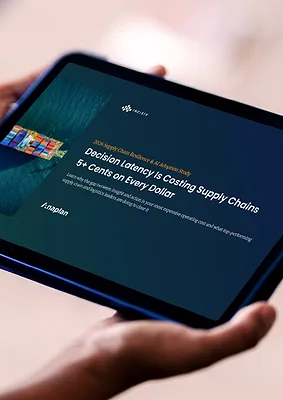
Incisiv’s 2026 supply chain resilience report, conducted in partnership with Anaplan, assesses the current state of supply chain operations by surveying industry leaders across North America and EMEA. By examining strategic priorities, demand-supply responsiveness, technology and AI infrastructure, and financial outcomes, the research uncovers the critical financial impact of the “latency tax”— the hidden cost of delayed decision-making — and how to reclaim that margin.
Modern leaders need data-driven insights to make confident, real-time decisions that shield margins, enhance supply chain operations, and enrich customer experiences. As executives face a deluge of data points, this isn’t always straightforward. Global supply chain organizations face additional uncertainty — ranging from shifting environmental conditions to geopolitical disruption.
Hannah Testani, CEO of Intelligent Audit, explains how organizations can start small with AI, automate repetitive tasks, connect siloed data sources, and generate quick wins.
The majority of AI projects fail from a lack of foundational integrity. Clean data and integrated systems are the non-negotiable price of entry for a successful journey.